· Wallet Sleuth Team
Why bubble maps are hard to read (and why fund tracing needs a linear flow)
Bubble maps answer one question well: who holds this token, and which holders look connected. If that's your question, a bubble map is a fine tool. The problem starts when you use one to answer a different question, the one that actually matters in an investigation: where did the money go? A force-directed bubble layout throws away the three properties that question depends on, and it makes you compensate with your own working memory. You become the layout algorithm.
Try to follow the flow
The picture below is a typical bubble map: 22 wallets, undirected connection
lines, two loose clusters. Somewhere in it is a real story, a 4-hop fund flow
from 7xKq… to Xw8t…. We even highlighted it for you, which is more help than
most bubble maps give.
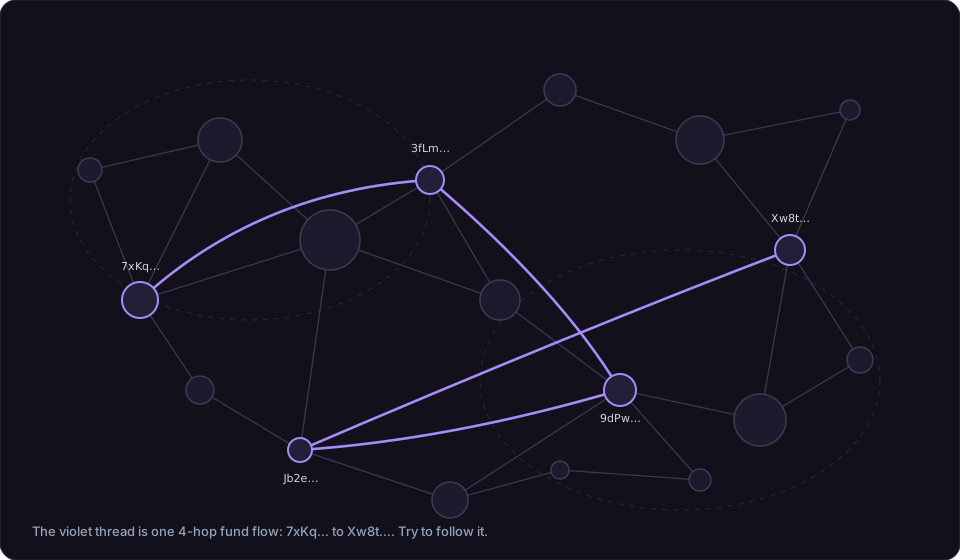
Even highlighted, reading it is maze-solving. Your eye enters at 7xKq…,
crosses three unrelated edges, doubles back to the lower left, and exits on the
far right. Now imagine the highlight isn't there, which is the normal case, and
you're reconstructing this path by clicking one node at a time and remembering
what you saw.
What the bubble layout threw away
Three things, specifically.
Direction is gone. The lines in a bubble map connect wallets, but a line doesn't tell you which way the money moved. Sent or received is the entire question in a trace, and the layout is silent about it.
Sequence is gone. A flow is a story: this wallet funded that one, which paid that one two days later. A force-directed layout positions nodes by simulated physics, so hop 3 can sit visually between hop 1 and the start. The order you need is not the order you see.
And position means nothing. Wallets sit where spring forces pushed them, not where the money went. So you memorize the geography ("the dev wallet is the big one at the top left"), and that memorized geography is your mental model of the case.
The same flow, laid out linearly
Here's the identical data with a rule instead of a physics simulation: money enters from the left and exits to the right. Funding sources sit left of the wallet you're tracing, destinations sit right, and each column is one hop.
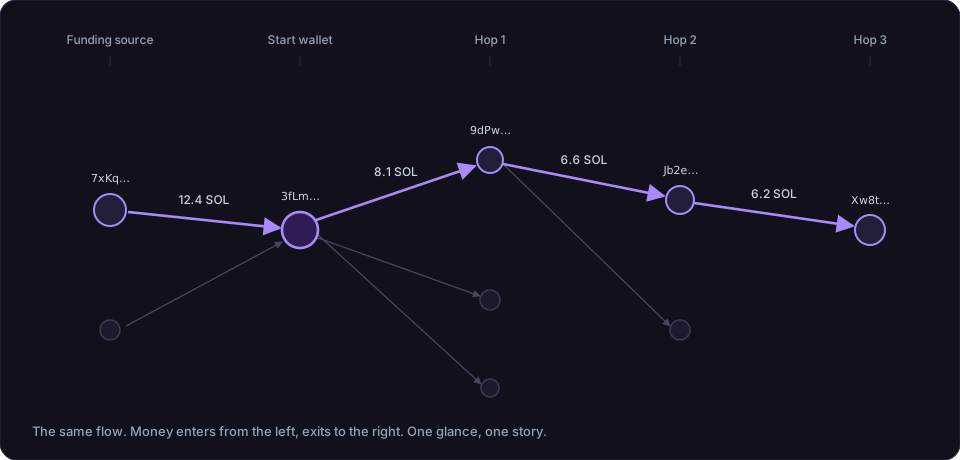
Nothing was simplified. The side branches are still there, just recessive. The difference is that the layout now encodes the answer: direction is the reading direction you've used your whole life, sequence is the column order, and an arrow with an amount on it replaces a bare line. You read it the way you read a sentence. One glance, one story.
The part nobody talks about: layout stability
Traces are live. New wallets appear mid-investigation because money keeps moving. Watch what each layout does when a single wallet arrives.
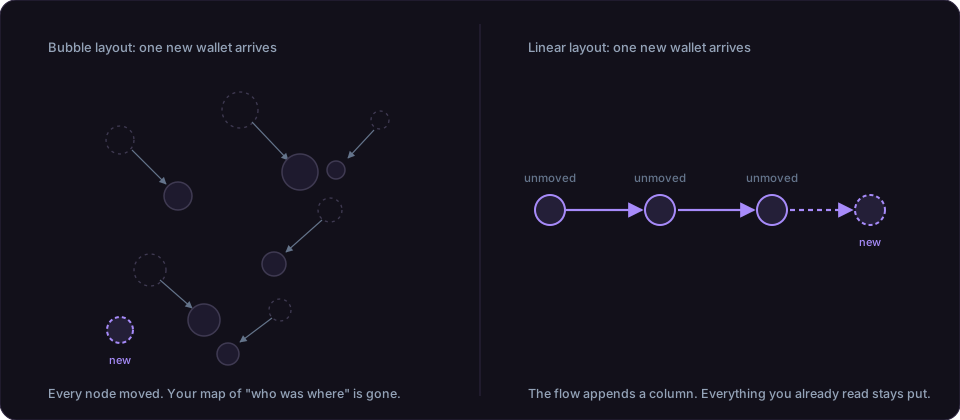
A force-directed layout re-runs its physics, and every node shifts. The geography you memorized is stale, so you rebuild your map of the case from scratch, every time the data updates. The linear layout appends a column and moves nothing. Whatever you already read stays read. Your mental model survives the update instead of being garbage-collected by it.
Where bubble maps genuinely win
To be fair about it: for supply auditing, a bubble map is the right form. Seeing that 40% of a token's supply sits in one visual cluster is immediate in a bubble map and slow in any list. Bubblemaps built its reputation on exactly that, and made holder concentration something you can screenshot and share. Different layouts answer different questions. Concentration is a clustering question, so use a clustering layout. A trace is a path question, so use a path layout.
How Wallet Sleuth draws the line
Scout, Wallet Sleuth's fund-flow tracer, computes hops as a directed traversal from the wallet you pick: funding sources get negative hops and render left, destinations get positive hops and render right. When money leaves a tracked wallet for a fresh address, the new wallet is discovered and appended in its hop column automatically, and every node carries its own data, including the wallet's 0 to 100 behavior score. It works the same way on Solana and Base, and the free tier covers 50 tracked wallets per page. If you've ever lost your place in a bubble map at 2am, that's the problem it was built to remove.
FAQ
Are bubble maps bad? No. They're the wrong tool for tracing and a good tool for holder-concentration questions. This article is about matching the layout to the question.
What is a "hop"? One transfer step away from your starting wallet. The wallet that funded your target is hop -1; the wallet your target sent to is hop +1.
Does a linear layout hide connections that a bubble map shows? No. Branches stay in the diagram, drawn recessively so the path you're tracing stays dominant. You can follow any branch and it becomes the highlighted path.